Polarion 2512: AI, UX, and a Java 21 Overhaul
Polarion lays the foundation for AI, improves daily collaboration, and forces a major tech stack upgrade. Here is my technical breakdown of the latest release.

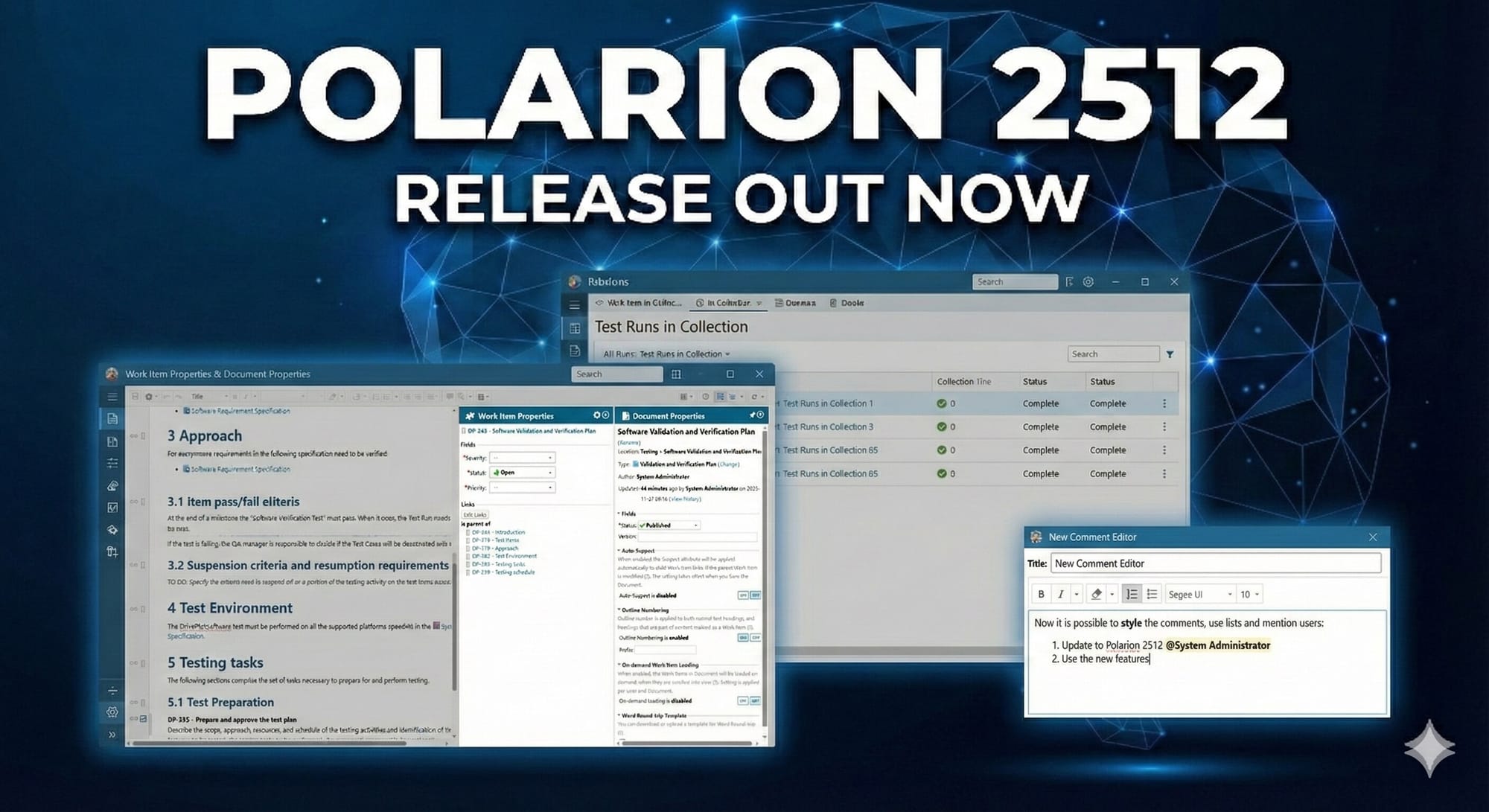
Quick update: Polarion 2512 dropped on December 1st, 2025.
While Siemens provides a detailed breakdown of all new features here, I want to focus purely on the features and updates that actually impact my daily work as a Solution Architect and Developer.
1. Polarion AI: The Foundation is Laid
Let's start with the biggest buzzword. Siemens is officially stepping into the AI game, establishing a technical foundation for features that will expand in future updates. The initial set includes Polarion Help (Chatbot), Content Validation, Similarity Analysis, and Consistency Checks.
My Reality Check:
- The Cost: Be aware that this requires a separate Add-on License. Innovation has a price tag.
- The Approach: Since these features were excluded from the Early Access program, I haven't been able to benchmark them yet. As always with "V1.0" features: apply healthy skepticism. Verify exactly what value they bring to your specific workflow before committing to the license cost.
- The Tech: It defaults to Azure OpenAI but allows for Custom LLMs (configured via
polarion.properties), which is good news for strict data privacy requirements.
2. UX: Finally, Modern Collaboration
While AI is the future, improved collaboration helps us today.
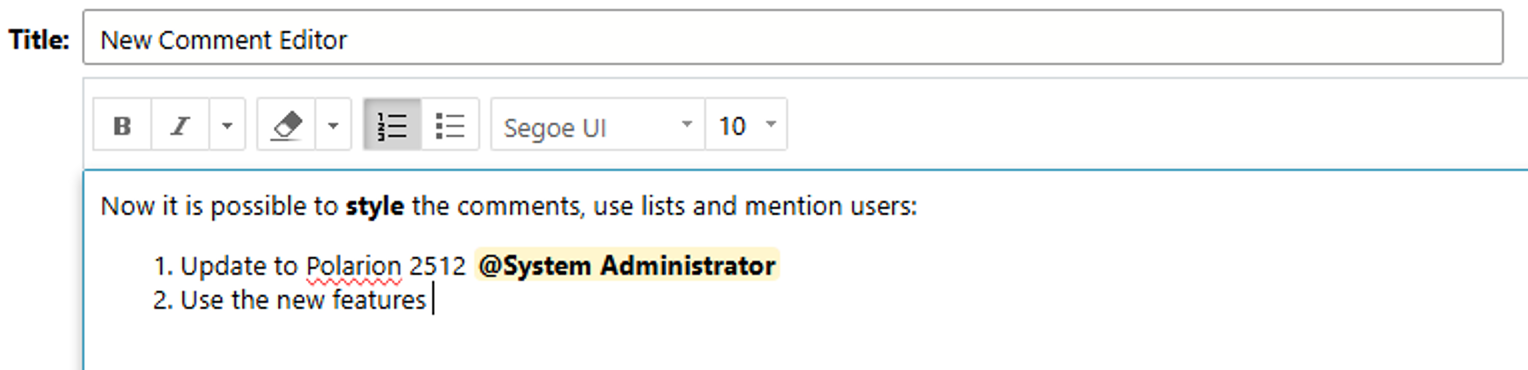
- @Mentions & Rich Comments: You can finally tag users (
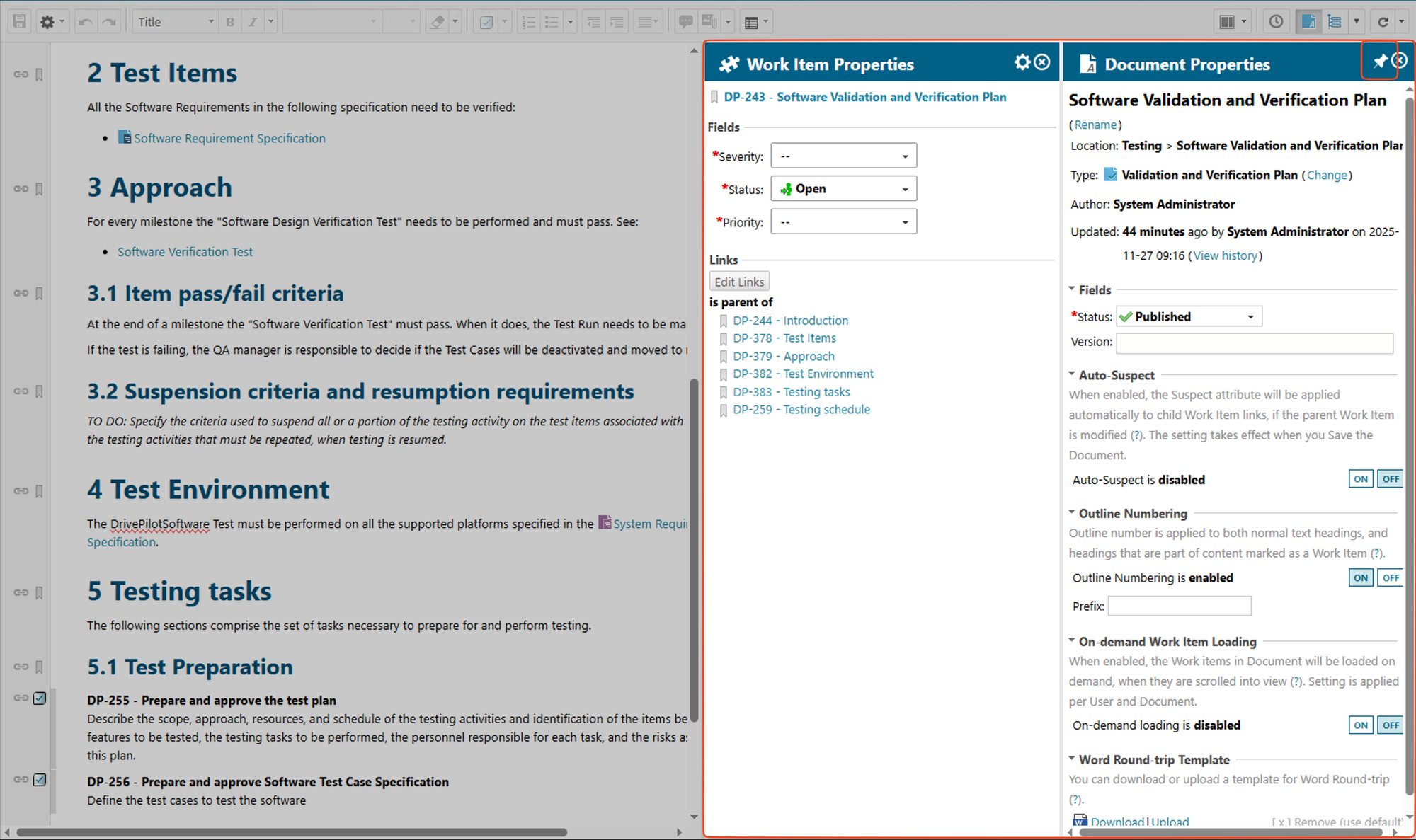
@Phillip) in comments and rich-text fields. Plus, comments now support full rich-text formatting—meaning you can use bold, italics, and lists to structure your feedback properly. - Multiple Sidebars: You can open up to two document sidebars at once. Perfect for workflows like signing a document and immediately transitioning its status, or writing a detailed comment while keeping the Work Item properties visible side-by-side.
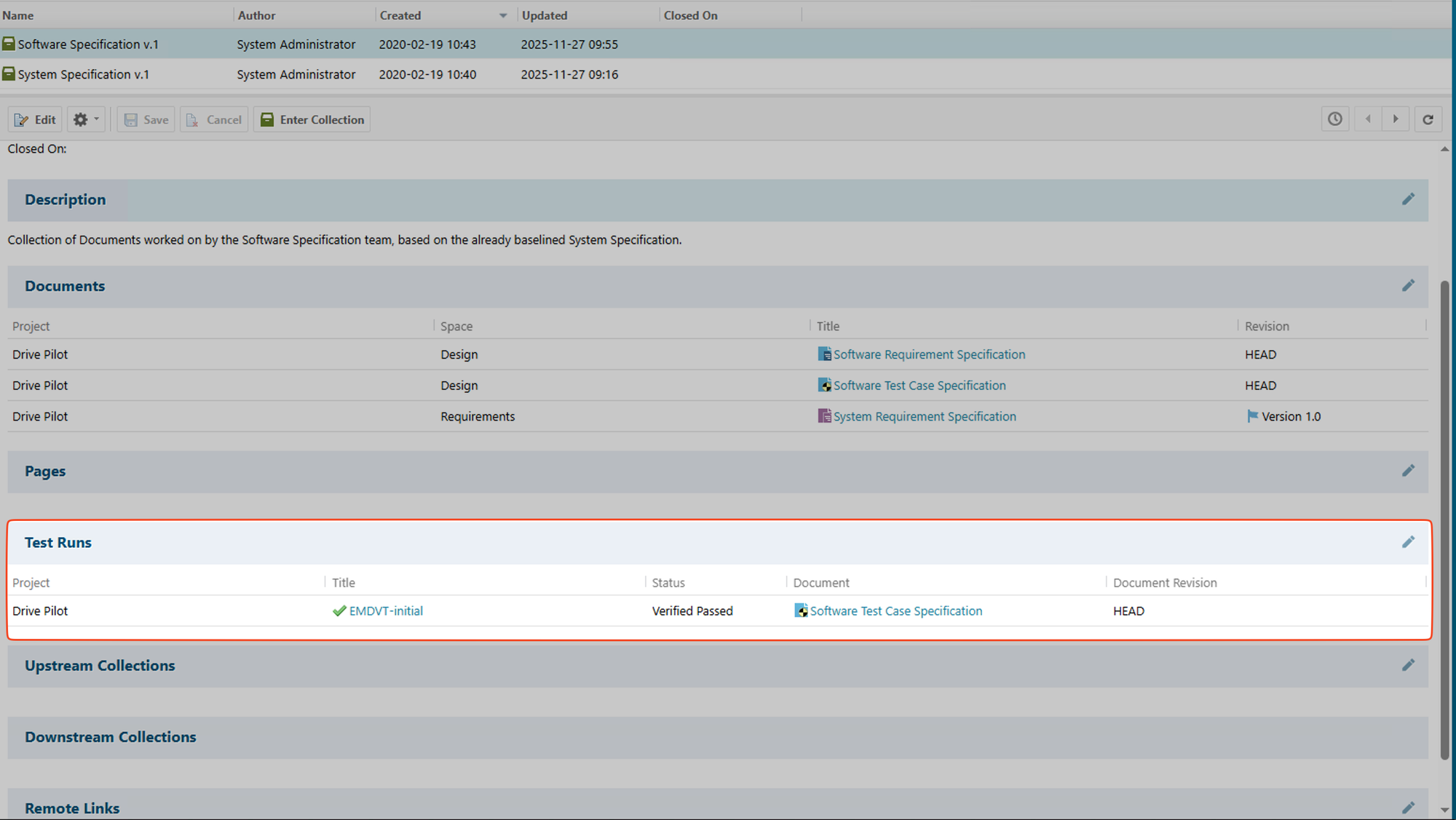
- Test Runs in Collections: You can now add and manage Test Runs within the context of a Collection. No more context switching or losing track of which run belongs to which release package.
3. REST API: A Massive Leap Forward
Under the hood, the engine got a significant upgrade. In previous versions, the REST API felt like it was still catching up. With 2512, Siemens has significantly expanded capabilities, giving us comprehensive control.
Forget simple data retrieval; we are talking about full administration and structure control:
- Custom Fields Configuration: You can now administer Custom Fields through the REST API. Creating, reading, and changing configurations for Work Items or Documents programmatically is finally possible.
- Document Structure (PATCH): This is huge for migration scripts. We can now use
PATCHto move Document Parts and update their indentation to set parent-child relations. Headings are now treated as standard parts, making document generation via API much smoother. - Deep Metadata Access: New endpoints let you retrieve the complete field schema of Work Items and Documents (including inherited fields). This makes building dynamic external integrations much easier as you don't have to hardcode field IDs anymore.
⚠️ Migration: CORS Configuration
If you access Polarion via external web apps (e.g., custom dashboards), you must update your polarion.properties. The old property com.siemens.polarion.rest.cors.allowedOrigins is deprecated. You need to migrate to the new Tomcat-scoped properties (com.siemens.polarion.tomcat.cors.*), otherwise, external services will lose access.
4. The Tech Stack: Java 21 is Mandatory
Polarion now runs on OpenJDK 21. Support for Java 17 is gone.
Action required: This isn't just a simple update.
- Certificates: You’ll need to migrate your certificates (Java Keystore) during the server update.
- JVM Flags: Check your service configuration! Old flags like
-XX:+UseBiasedLockingare deprecated and should be removed from the java service entirely, otherwise the server might fail to start.
🛑 Developer Warning: The Backward Compatibility Trap
For service providers and extension developers, this update creates a dilemma. While the 2512 server requires Java 21, building your custom plugins with Java 21 target will make them incompatible with older Polarion versions (which run on Java 17 or 11).
If you—like me—prioritize backward compatibility and support customer environments up to 2 years in the past, you cannot switch your build artifacts to Java 21 yet. We effectively have to stick to older Java build targets for another two years.
5. Job Monitor: Finally, Less Noise
Moving to operational improvements: The Job Monitor page no longer spams you with a global list of everything running in the background.
- Context Aware: It now strictly filters by context. If you are in a Project, you only see jobs relevant to that Project.
- Permissions: The
MANAGE JOBSpermission is now restricted to Global Admins by default. - The Exception: Don't worry—regular users can still access logs for jobs they triggered themselves (like Work Item exports) without needing extra permissions.
6. Scalability: External Attachments
To stop the SVN repository from exploding in size, we can now store attachments externally (AWS S3, Azure Blob, or local filesystem).
⚠️ My take: Essential for enterprise setups, but be careful – it’s a one-way street. Once you move attachments out of SVN, there is no supported way back.
7. Architecture Preview: The Location Index
And finally, a look into the future. There is a fundamental shift happening deep in the backend. Siemens is introducing the Location Index (Early Access), which moves history data from legacy Object Maps to a Postgres-based structure.
The Promise: This is the foundation for significant performance improvements in future versions (likely standard in Polarion 2606).
⚠️ The Warning: Do not enable this on Production. In 2512, it is strictly for test environments and currently breaks backups, specific APIs, and external attachments. Keep it disabled for now, but get ready for a much faster history engine next year.
Summary
Polarion 2512 feels like a "cleanup and modernize" release. It brings the AI hype, improve long-missing UX features, and modernizes the backend with Java 21 and a powerful REST API. Just make sure to double-check your JVM flags, Keystores, and CORS settings before hitting the update button.
🚀 Want to test it immediately? Good news for my Docker users: I have already updated my Docker images to Polarion 2512. You can pull the latest tag right now to test the new Java 21 environment and REST APIs in a sandbox without putting your main instance at risk.