Fable Was Nice to Have. Sonnet 5 Is What I'm Actually Running On
Fable 5 is genuinely strong at security, and too expensive for what I actually need. Here's why Sonnet 5 is the model carrying my day-to-day work this cycle.

Fable came back for a short window after the US lifted its export control order, and today marks the end of the cheap ride: subscription access ends, and from tomorrow it's billed through usage credits at standard API rates. Nice to have it back. It's a genuinely strong security model, built for vulnerability scanning and secure code review, and I don't want to undersell it. If that's your problem, this was your window.
For what I build, though, the cost doesn't quite match the benefit. I don't ship new internet-facing applications, my self-hosted Polarion work isn't exposed the way a public SaaS product is, and as a senior developer I already know where the real gaps would be. There simply aren't many left that need Fable-level scrutiny. On top of that, it's still the heaviest token burner in the current lineup, by a wide margin, so the gap between what it costs and what it adds only gets wider for my setup. The model I'm actually spending time and budget on this cycle is Sonnet 5.
Sonnet 5 closed the gap to Opus
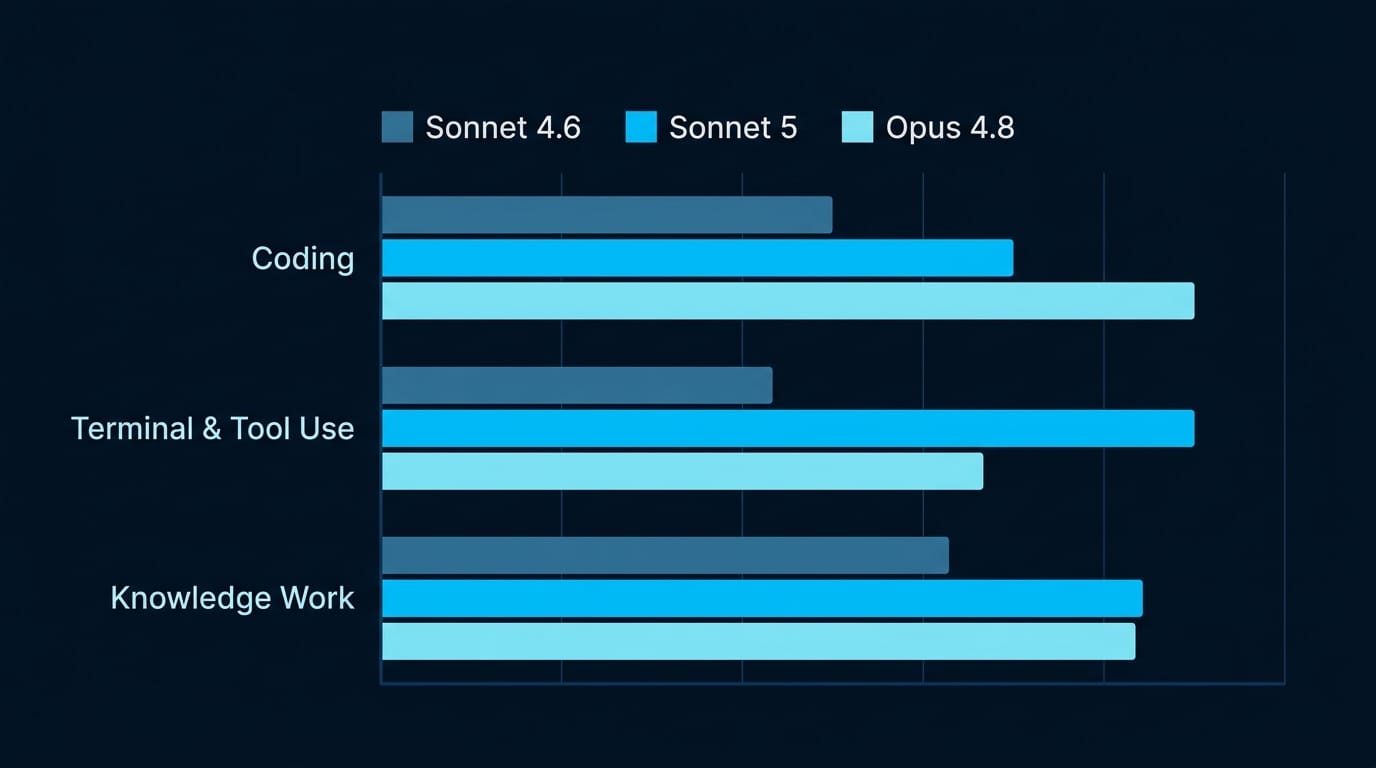
Sonnet 5 shipped last week as Anthropic's most agentic Sonnet yet: better planning, better tool use across browser and terminal, and the ability to carry complex multi-step tasks without me stepping in every few turns. It's a clear step up from Sonnet 4.6 across the board, and the biggest jump is in terminal and tool use, where it now plays in the same league as Opus 4.8, sometimes even ahead of it. Coding and general knowledge work land close behind Opus too. The chart above shows how the three stack up against each other.
Put plainly: Sonnet 5 on High effort now feels roughly like Opus 4.8 on Medium, at a noticeably lower price.
A catch a lot of people don't know about
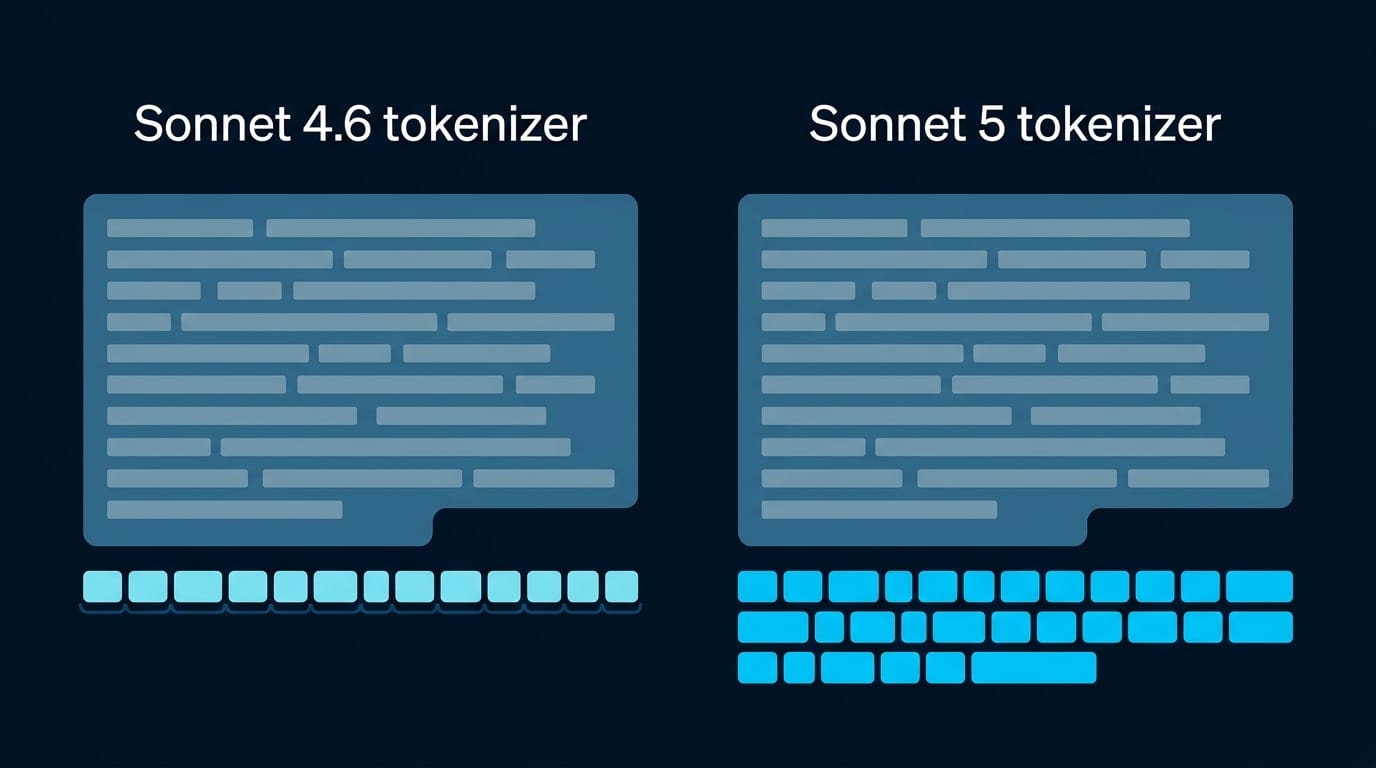
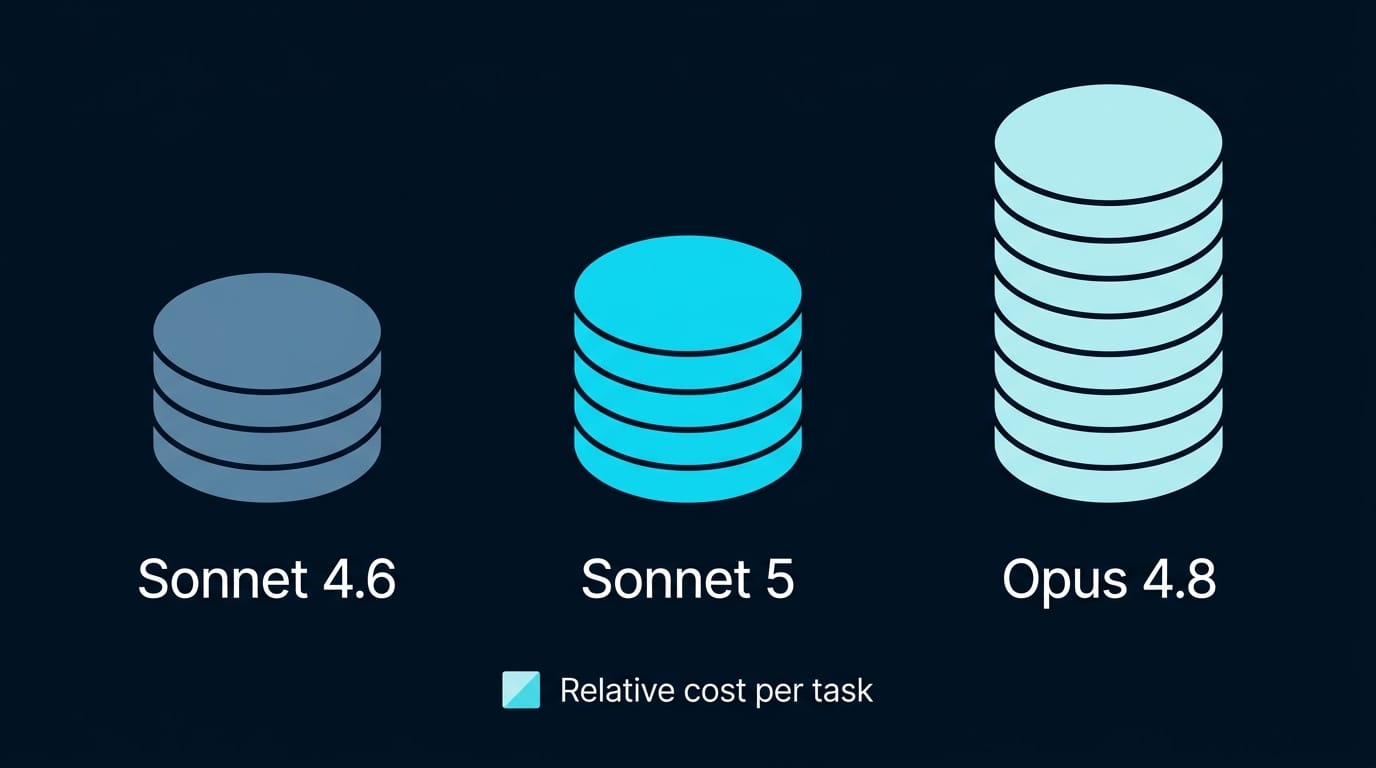
Sonnet 5 runs on a new tokenizer, the same shift Opus went through a version or two back. The same piece of text now breaks down into visibly more tokens than it did under Sonnet 4.6, shown in the graphic above. Price per token barely moved, but in agentic workflows where that overhead compounds across dozens of tool calls, actual spend can land above Opus even though the sticker price looks cheaper. I noticed it firsthand: my weekly usage window on the Cloud Code plan burns noticeably faster than it used to.
The fix is simple once you know it's there. Sonnet 5 on Medium effort gets you roughly what Sonnet 4.6 needed High effort for, at a similar token cost. I've moved standard coding tasks down to Medium by default, and reserve High or X-High for the tasks that actually need it. Same ceiling, better dial. Opus 4.8 with Ultrathink still gets the planning and architecture phase, where its ability to spawn sub-agents on its own is worth the extra spend.
Where the tool-use jump actually pays off

My workflow runs on MCPs for Polarion and Playwright, and I'm increasingly letting Claude build and test UI directly against a Chrome dev environment. Sonnet 5 handles that loop noticeably better than before: fewer dead ends, cleaner tool calls, less babysitting. It costs more tokens per step, but once you know that, you can dial the effort level per task instead of defaulting to High everywhere.
Genuine question for the comments: is Fable 5 overrated, or is my use case just not what it's built for? What are you actually running day to day, Fable or Sonnet 5?
Sources
- Introducing Claude Sonnet 5 — Anthropic
- Claude Sonnet 5 System Card — Anthropic
- Anthropic launches Claude Sonnet 5 as a cheaper way to run agents — TechCrunch
- Sonnet 5 vs Sonnet 4.6 vs Opus 4.8: Benchmarks, Pricing, Cost-Performance — MarkTechPost
- Claude Sonnet 5: strong agentic performance at a higher cost per task — Artificial Analysis
- Claude Sonnet 5 Token Efficiency Problem — MindStudio
- Redeploying Claude Fable 5 — Anthropic
- Fable 5 Subscription Ends Tomorrow — TechTimes