What's on My AI Radar Right Now (and Why I Took the Claude Academy Anyway)
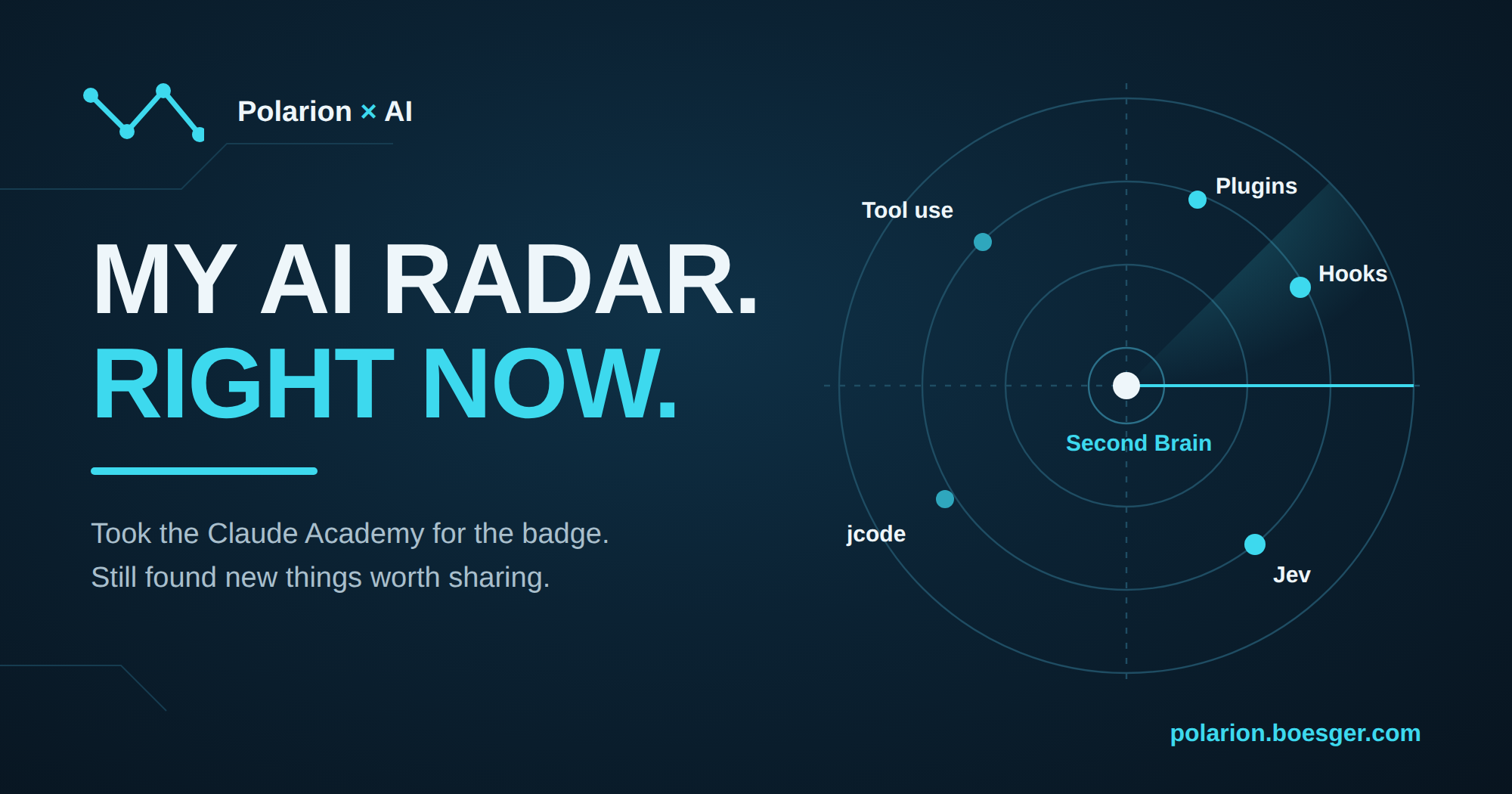
I took the Claude Academy courses mostly for the badge and still learned something new. What stood out, two tools outside Claude I'm watching, and the Second Brain I'm building in the background.

Contents
- Why I signed up
- What was new for me
- Two tools outside Claude I'm watching
- What I'm building: my Second Brain
- How I keep my own setup current
Why I signed up
I mainly went into the Claude Academy courses for the badge. I work with AI every day, and I expected most of it to be familiar. Most of it was. But a few things were new to me, and I enjoyed that more than I expected. So I want to share what stood out, plus a few other things that are on my radar right now.
https://academy.claude.com
Here's what I actually took away.
What was new for me
These are the points from my notes that changed how I think about my setup.
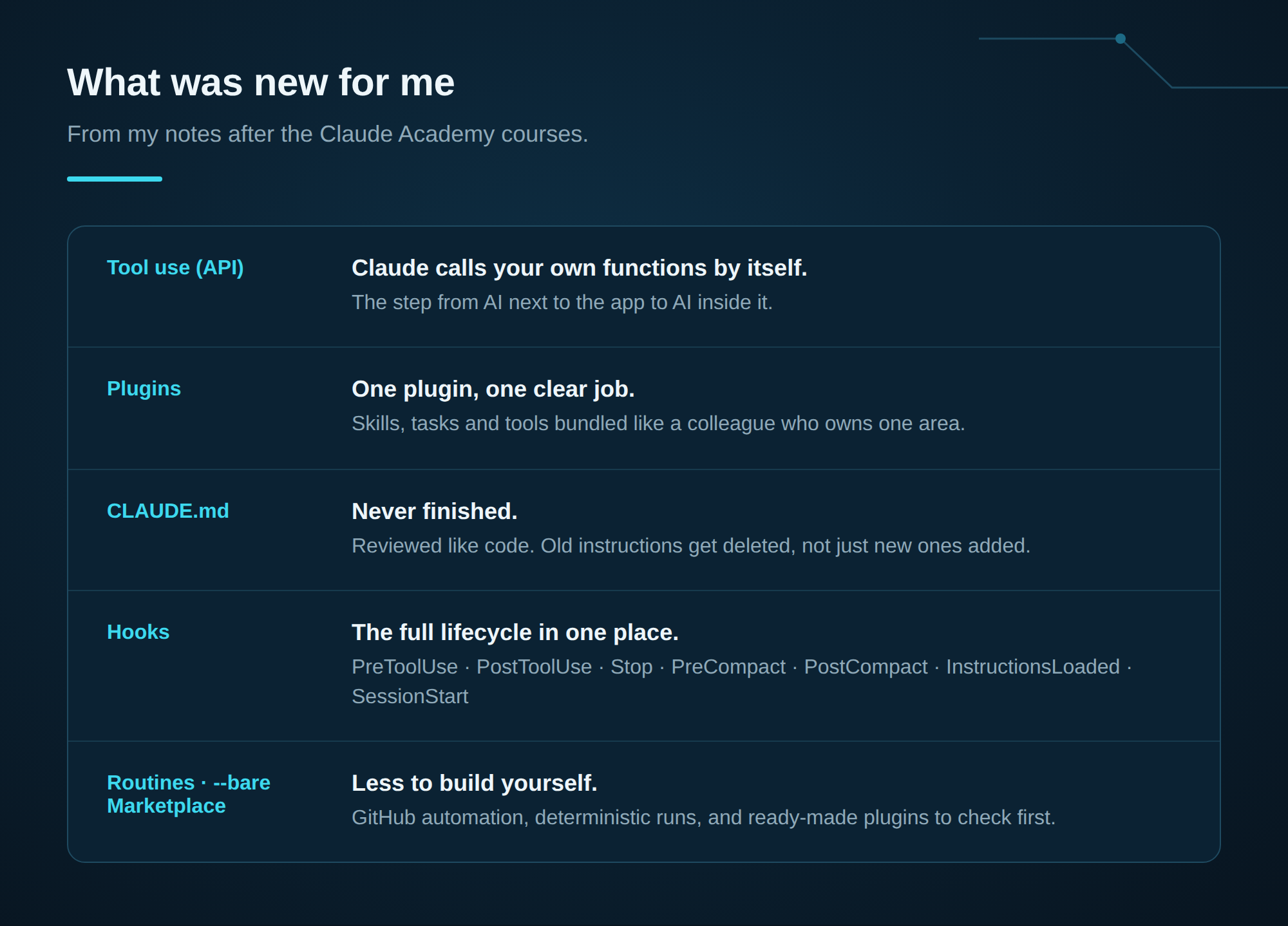
Tool use through the Claude API. You describe your own functions to Claude, and it decides when to call them and continues with the result. In a Polarion context, that means Claude could fetch a work item by itself instead of someone pasting an ID into a prompt. For me, this is the step from "AI next to my app" to "AI inside my app."
Plugins as colleagues. A Claude plugin bundles skills, tasks and tools into one unit with a clear job. I like thinking of it as a colleague who owns one area, like changelog formatting or test case generation. That makes it easier to debug and extend than one big prompt that tries to do everything.
"Your CLAUDE.md is never finished." A simple sentence from the course that stuck with me. I treat my context files like code now: I review them, and I delete old instructions as often as I add new ones.
The full set of hooks. I already use hooks a lot, for my custom MCP servers and the connection to my Second Brain. The course showed me the whole lifecycle in one place: PreToolUse, PostToolUse, Stop, PreCompact and PostCompact, InstructionsLoaded and SessionStart. A few of these I hadn't used yet.
Routines, --bare and the plugin marketplace. Routines make GitHub automation easier. The --bare flag gives you a stripped-down, deterministic run when you need reproducible results. And there's now a marketplace for Claude Code plugins, so it's worth looking there before building something yourself.
The Academy covers Claude, but some of the most interesting things right now are happening next to it.
Two tools outside Claude I'm watching
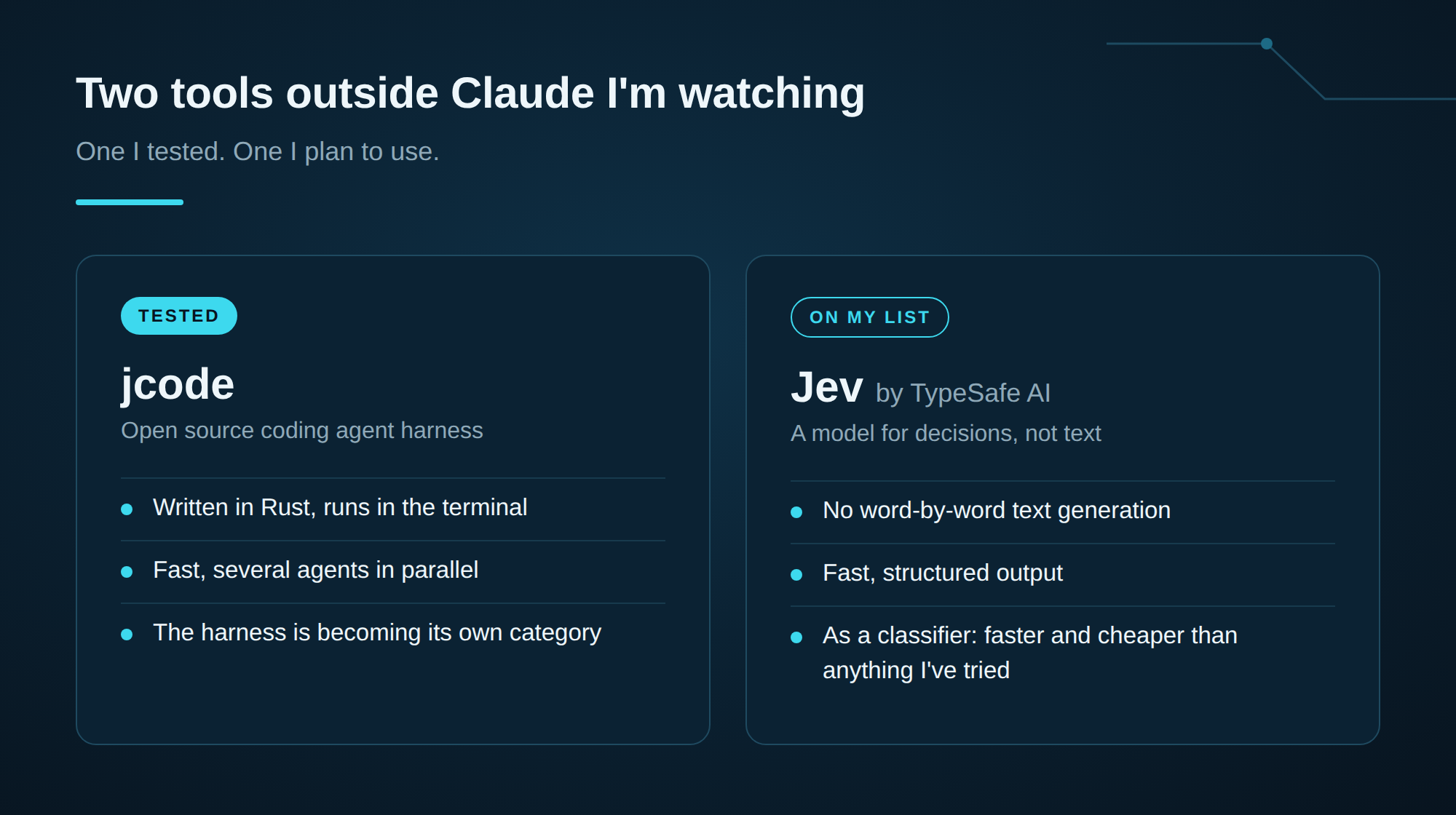
jcode. I tested and evaluated this one. It's an open source coding agent harness written in Rust. It runs in the terminal, it's fast, and it can run several agents in parallel. What I find most interesting is the direction: the harness around the model is becoming its own category, and that choice is starting to matter.
Jev by TypeSafe AI. This is a new kind of model. It doesn't generate text word by word like a normal LLM. It's built for fast, structured decisions. I tried it as a classifier and it's faster and cheaper than anything else I've used for that job. I'll probably use it in production, unless Claude ships something similar soon. (TechCrunch, TypeSafe AI)
Tools like these are interesting on their own, but what I care about most is where they end up: in a system that works for me in the background.
What I'm building: my Second Brain
A lot of my time used to go into small admin tasks that had nothing to do with my actual work. Sorting emails, filing invoices, finding the note or repo where I'd solved something before. That's the problem my Second Brain solves.
It runs quietly in the background, and it gets a bit more access every week. Right now it sorts my incoming emails into categories and uploads invoices straight into my admin tools, without me touching them. It knows my repos, my tasks and my notes, so when I ask it something, it answers from my own context instead of starting from zero.
And it doesn't only answer. It also takes on tasks by itself in the background, so work gets done while I'm focused on something else.
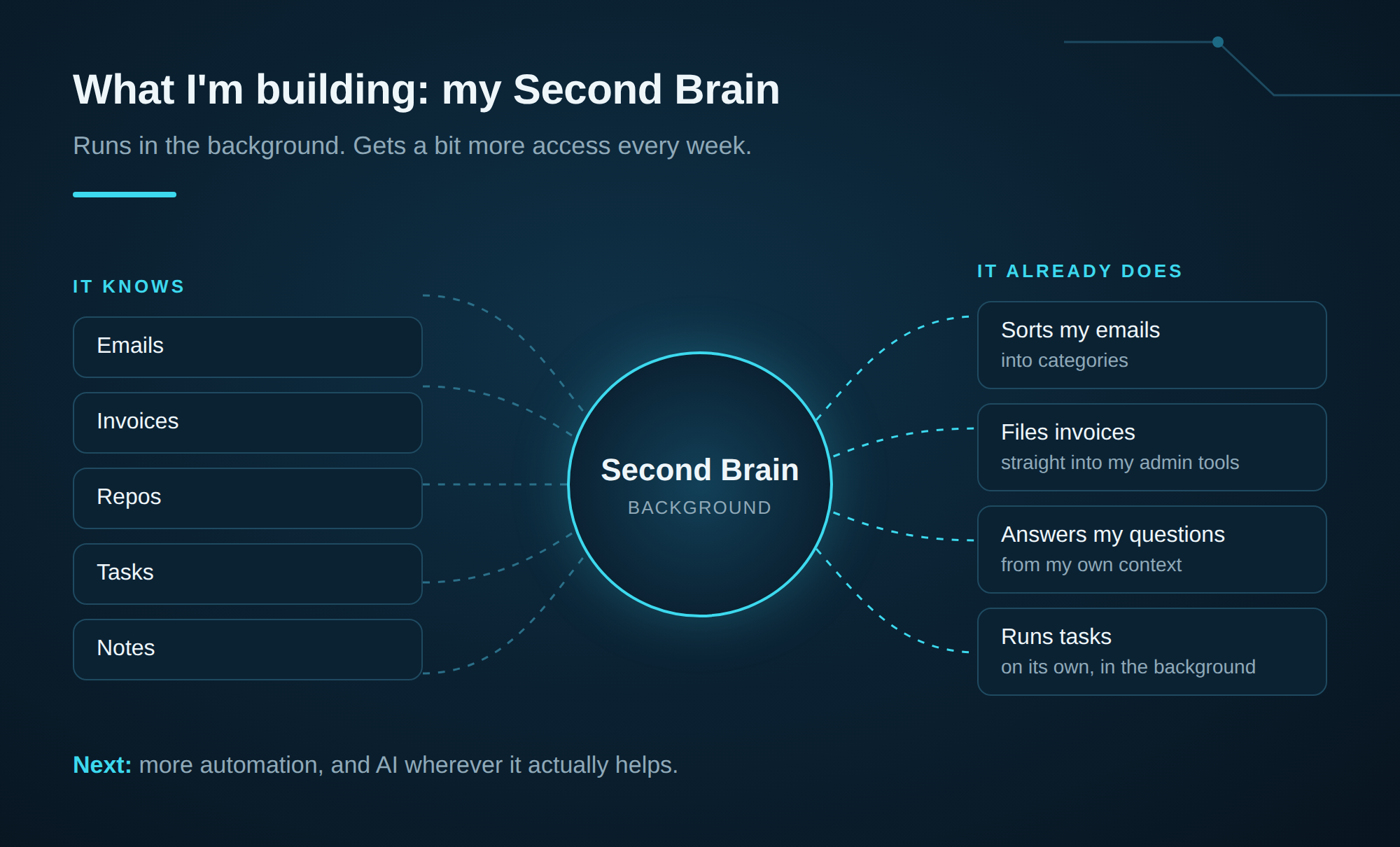
This is where most of my interest goes right now. Each week I look for the next thing it can take over, and for places where adding AI makes sense instead of just adding more automation. It's never finished, and that's the part I enjoy.
A system that keeps growing also needs regular checkups, which brings me to my monthly review.
How I keep my own setup current
Once a month, I hand my whole Claude setup to a bigger model, Opus or Fable, and ask it to review everything against current best practices: instructions, hooks, MCP servers, plugins. When I've learned something new myself, like the points above, I name it in the review prompt so it gets checked too.
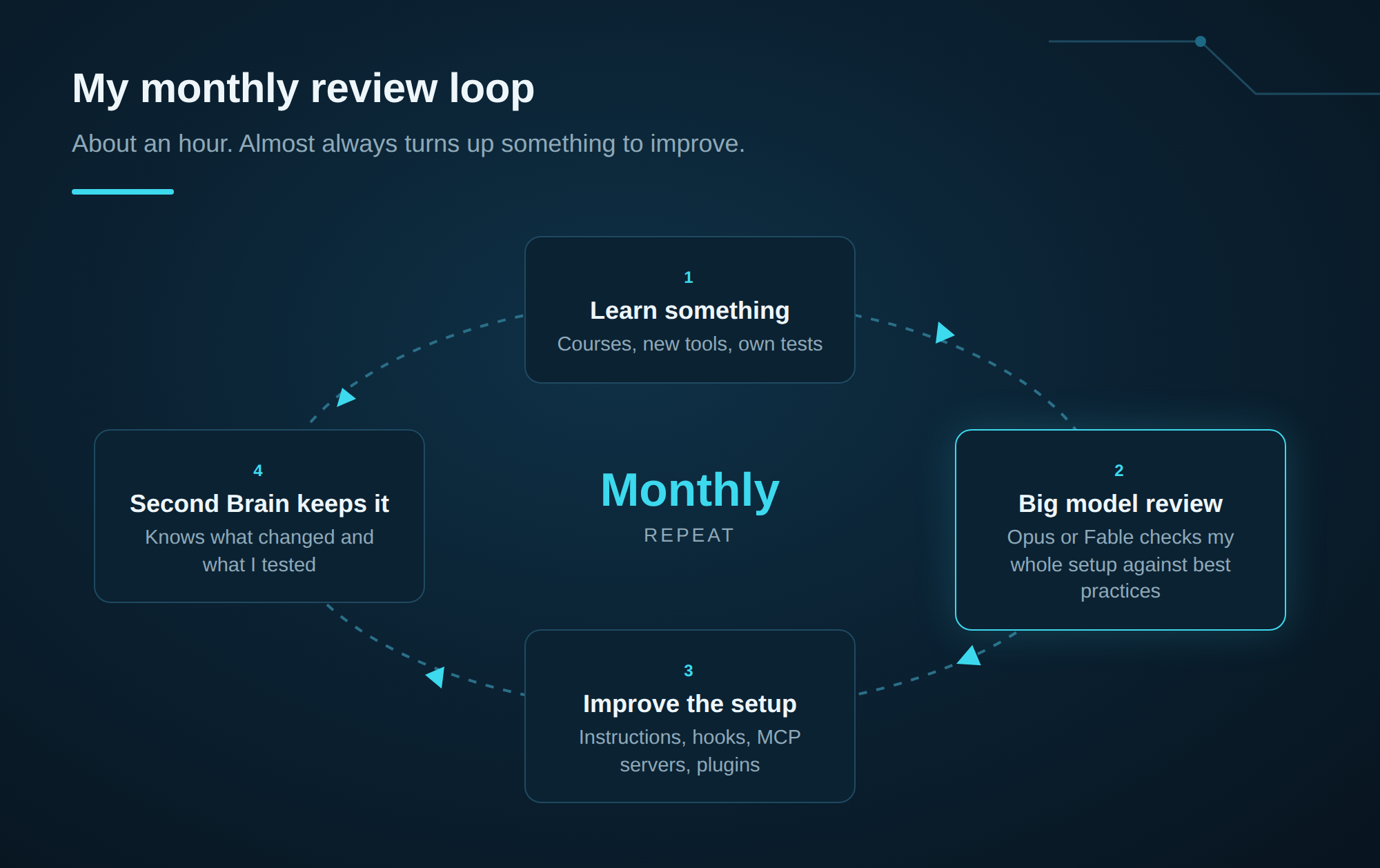
It takes about an hour and almost always turns up something worth improving. My Second Brain helps here too, because it already knows my repos, notes and what I've tested since the last review.
That's the loop for me: learn something, feed it into the review, improve the setup, repeat.
What's on your radar right now? I'm always happy to hear what others are testing.